Who I work with · Museums & heritage
Illustration and design for museums, historic houses and heritage sites
I work with curators, interpretation and learning teams, heritage consultants and creative producers to turn research and layered histories into maps, panels, exhibition graphics and learning resources that visitors understand.
Interpreting research for public audiences
Museums and heritage organisations face a familiar challenge: how to communicate complex research, layered histories and place-based stories in ways that are accessible, engaging and accurate.
Whether you are developing a new exhibition, refreshing interpretation panels or commissioning a visitor map, the visual decisions shape what visitors notice, what they understand and what they remember. Illustration can show what photographs cannot: a room as it was used, people who were never photographed, a process from start to finish, or a whole site at once.
My job is to balance historical integrity with clarity and warmth, so that interpretation is both rigorous and welcoming.
How I can support your project
Interpretation panels
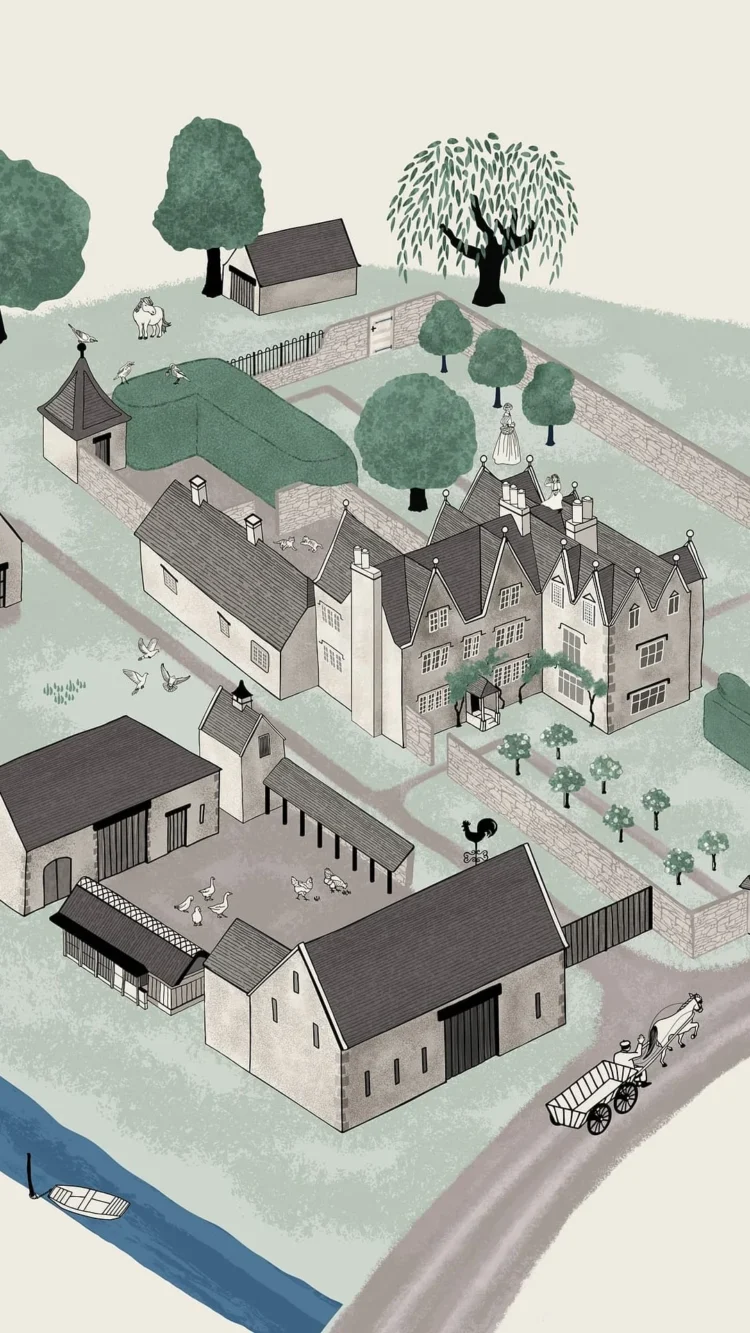
Drawings that sit alongside your text: people at work, objects in use, a building as it once was, or a process explained step by step. At Kelmscott Manor, the characters from the site map were also supplied individually for interpretation boards and the education programme.
Exhibition branding and graphics
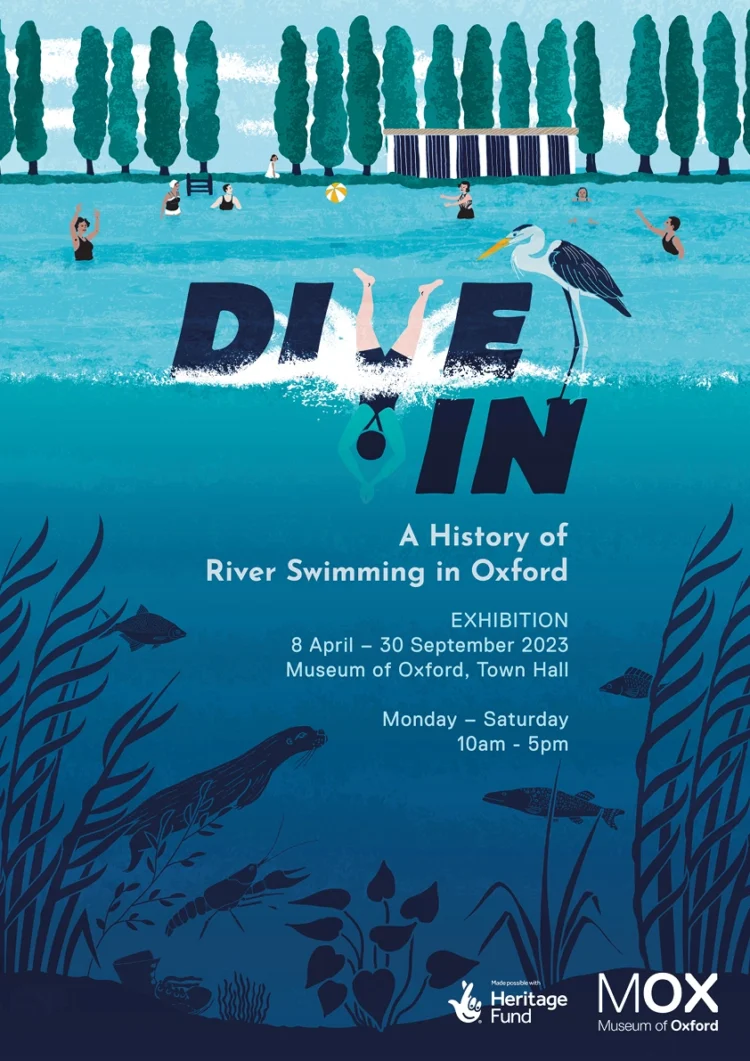
An exhibition identity that runs from the poster to the panels. For Dive In at the Museum of Oxford, I created the exhibition logo, the illustrated poster and separate artwork that the museum used on interpretation boards, social media and its podcast.
Visitor maps and family trails
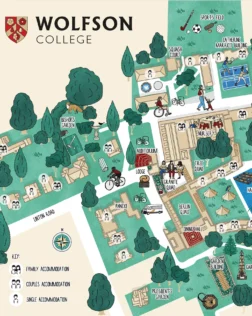
Maps that welcome visitors and introduce the wider story of a place: how buildings, gardens and routes relate to each other. Family trails add characters and things to find, so that younger visitors explore with a purpose. Illustrated maps
Objects, activities and interactives
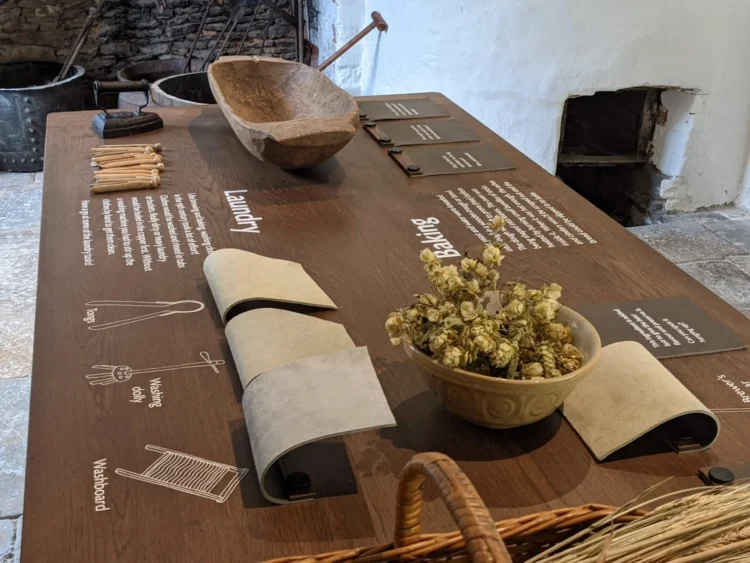
For the Brewhouse at Kelmscott Manor I illustrated historical objects for an interactive game about brewing, laundry and baking, designed to help children learn through play. For the dovecote, a gobo projection brings the Morris family’s horse, Mouse, onto the wall.
Publications and learning resources
Catalogues, guidebooks, cookbooks and research-led learning materials, with design and layout as well as illustration. As a former teacher, I bring an understanding of how learning materials are actually used. Examples include the Mixing Matters cookbook for the Museum of Oxford.
Promotion and merchandise
Posters, leaflets, website illustration and shop products. The same drawings can often be planned to do several jobs: the Uncomfortable Oxford map of questions is now also sold as an A3 poster.
Development-led heritage interpretation. Even new housing developments have a past, which is sometimes revealed through archaeology. Illustrations of the people who once occupied a site can help a new community connect with the place.
Heritage projects
More about heritage projects
Kelmscott Manor: maps, characters and objects for a heritage project
A commission in several parts for the summer home of William Morris, part of a National Lottery Heritage Fund project: a site map, a…
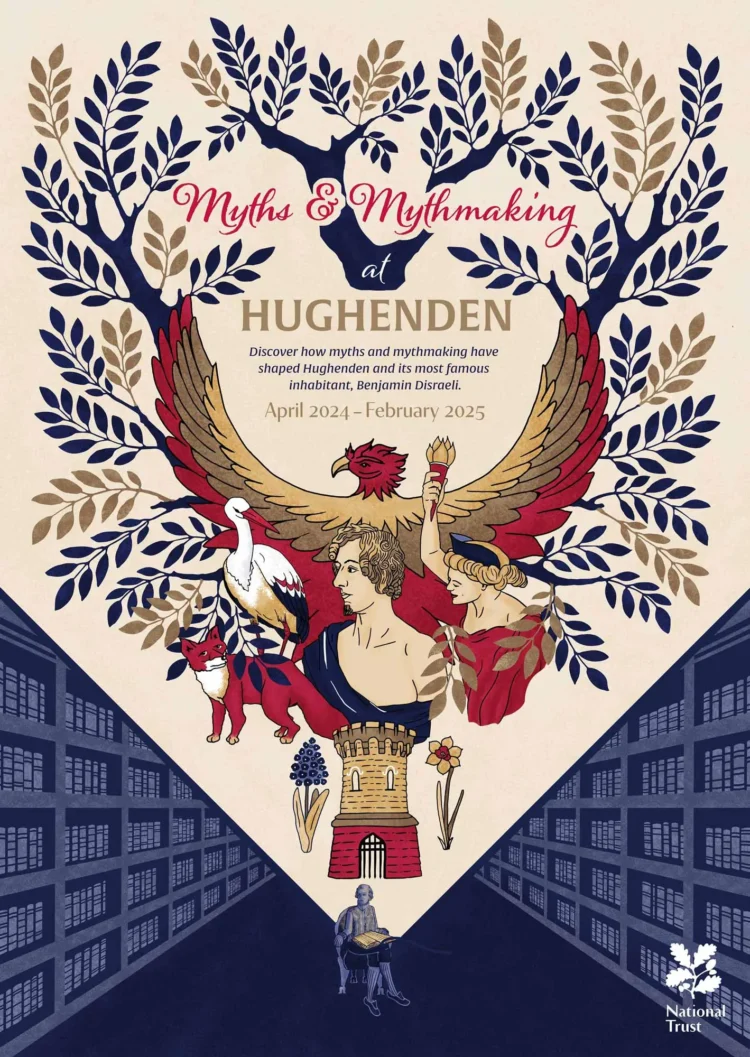
Myth and Mythmaking: a year-long theme for Hughenden Manor, National Trust
A set of illustrations to carry a National Trust property’s theme for the year, designed to stand out from the Trust’s general branding without…
Dive In: exhibition branding for the Museum of Oxford
An exhibition identity for a Museum of Oxford display about the history of river swimming in the city, supplied as a logo, a poster…
Illustrated historical objects, Kelmscott Manor

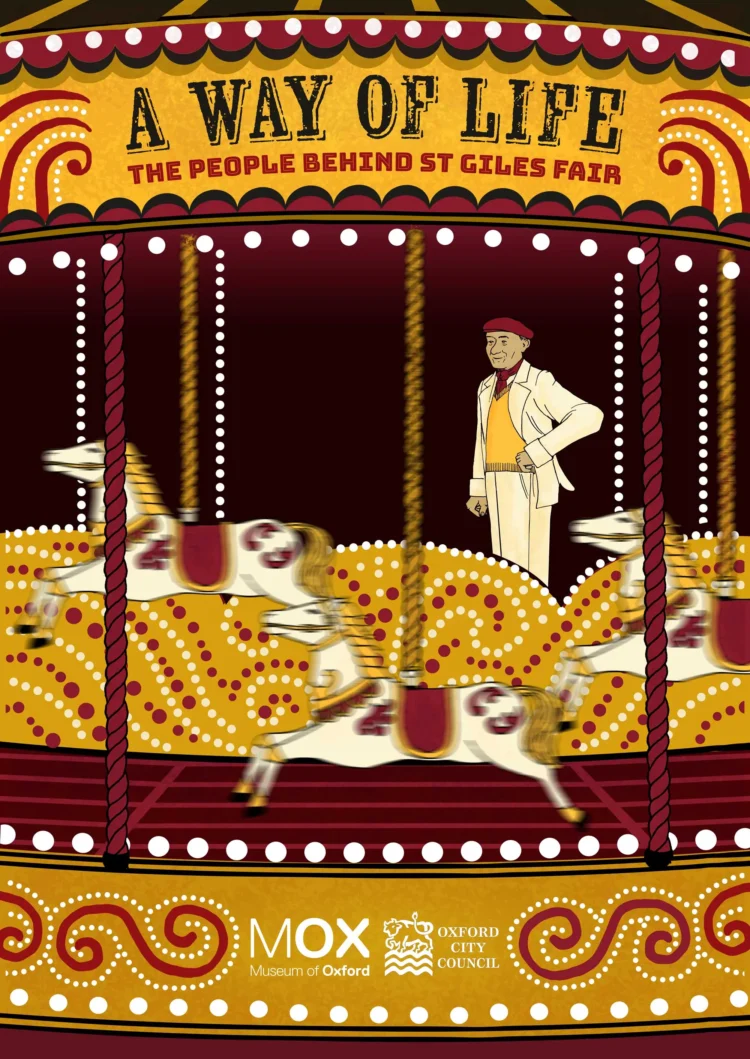
Illustrated poster about the stories of fairs

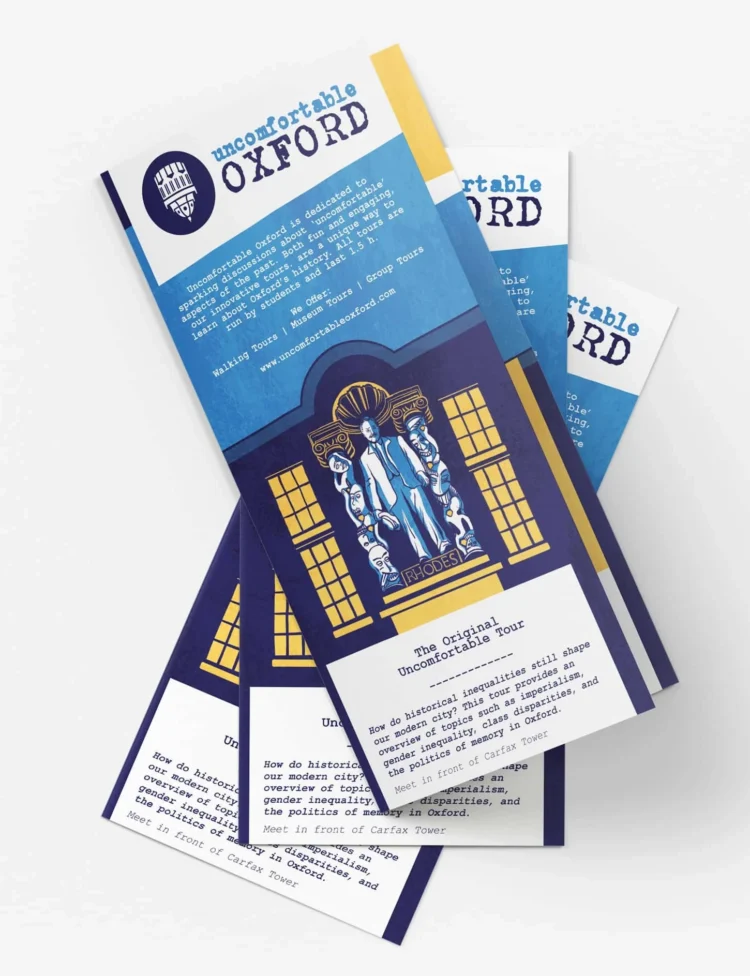
Uncomfortable Oxford: illustrated branding for city tours
Illustrations for a social enterprise that runs tours about uncomfortable aspects of Oxford’s past, designed to draw attention to buried facts without taking sides.
Working with heritage projects
Heritage projects come with funders, committees and opening dates. I plan the work around them.
- Funded projects. The Kelmscott Manor interpretation was part of a National Lottery Heritage Fund project, delivered in several parts: site map, village map, objects and a projection.
- Approvals. Pencil roughs give curators and specialists a chance to check content before the final artwork is made.
- Brand guidelines. At Hughenden Manor, the aim was to stand out from the National Trust’s general branding without clashing with it.
- Accessibility, files and licensing. Covered in detail on How I work.
What clients say
The illustrations and site-map that Kati has created for Kelmscott Manor are really very successful and everyone associated with the National Lottery Heritage Fund project was equally impressed with their clarity and the way in which the drawings of the Morris family members, birds and other characters work so well with the typography. She has made a delightful contribution to the Interpretation of the Manor and its outbuildings.
Kati has been a pleasure to work with. Her dedication to the project has been consistent from the first minute to the last. She captured perfectly what the Old Fire Station stands for through her extensive research, unique way of seeing, beautiful colour palette and dreamy characters. We are overjoyed with the result!
Frequently asked questions
What kinds of heritage illustration do you offer?
Visitor and site maps, interpretation panel illustrations, characters and reconstructions, illustrated objects, exhibition branding and posters, learning resources, publications and merchandise. If your project isn’t listed, get in touch and we can talk it through.
How do you make sure the illustrations fit our organisation?
Every project begins with a meeting, usually online, to understand your organisation’s character, audience and objectives. I then work closely with you so that the illustrations reflect your tone of voice, visual style and brand identity.
How long does a heritage illustration project take?
It depends on the scope. A single character or small set of drawings may take around two weeks; full illustration sets for exhibitions, websites or publications take several weeks. After our first conversation I provide a timeline that includes the dates when feedback is needed.
Can we ask for changes?
Yes. The process includes feedback at each stage, and most projects are complete within three rounds of revisions.
What files will we receive?
The formats the job needs, agreed at the start: print-ready files for printers and fabricators, web-ready files for digital use, and individual assets for reuse. See files and formats.
How much does heritage illustration cost?
Pricing depends on the scale, the complexity and how the work will be used. Illustrations for a temporary exhibition differ in scope from artwork for a long-term publication or permanent interpretation. After our first conversation I send a tailored proposal, and I work with small organisations as well as larger institutions.
Further reading

How museum illustration brings heritage stories to life
Discover how museum illustration brings heritage stories to life, engages visitors and creates meaningful links between audiences across time.
How map illustration can engage visitors
Discover how an illustrated map can engage visitors, tell stories, spark curiosity and become part of the visitor experience.
Commissioning a freelance map illustrator
Learn the essentials of commissioning a map illustrator for your projects. Transform your ideas into stunning illustrated maps.
Planning interpretation, an exhibition or a visitor map?
Early conversations are the most useful, before the brief is fixed. Tell me about the site or subject and your timescale.