Where the evidence ends: drawing what we don’t know
Every interpretive illustration reaches a point where the sources run out. How that gap is handled matters more than how well it is hidden.
A photograph records what was in front of the camera. An illustration of the past has to decide what was there. However carefully it is researched, it always reaches a point where the evidence runs out: what someone looked like, what they were wearing, how a tool was held, what a room was used for.
That isn’t a weakness of illustration. It is the reason museums and researchers commission it, because it can show what no photograph exists of. But it means every interpretive drawing contains decisions, and those decisions should be made openly.
Three kinds of gap
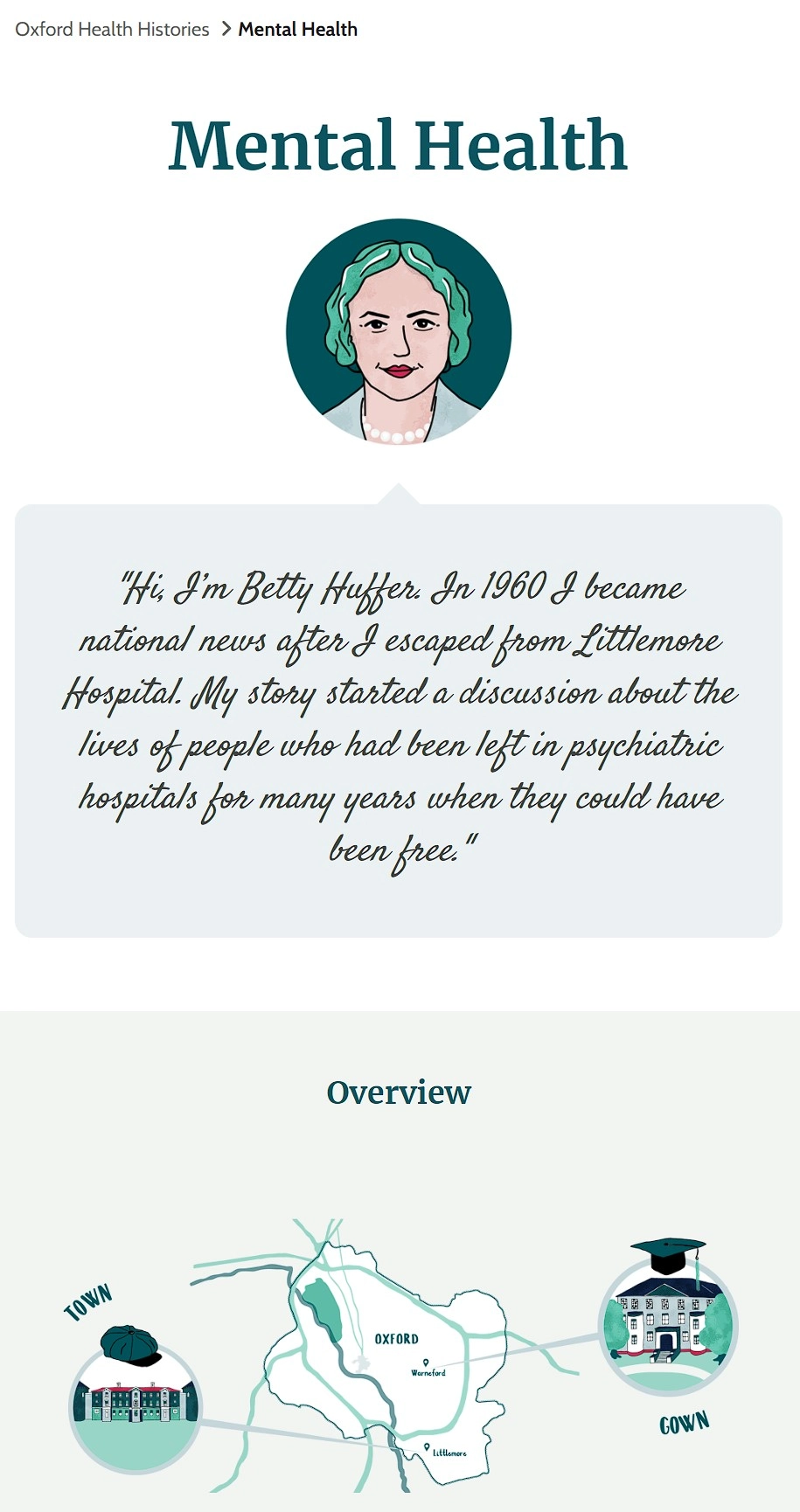
People with no likeness. For Oxford Health Histories, some people could be drawn from reference, while others, such as Anne Green, had to be imagined because very little is known about how they looked. An imagined portrait is still an interpretation. Its age, clothes and expression all say something.
Moments in time. At Kelmscott Manor, the site map shows the Morris family as they were when they moved to the manor in the early 1870s, so each person had to be drawn at the right age. Choosing a moment is itself an interpretive decision: it decides which version of a place visitors meet.
Everyday practice. For the Iron Age activity illustrations for Aberystwyth University, each scene followed research into how the task may have been carried out: a loom with weights, a coil pot made without a wheel, a boat built by a carpenter. “May have been” is the honest phrase, and the captions alongside the drawings help to carry it.
Ways to handle the gap
- Say so in the caption. One line, such as “an imagined portrait; no likeness survives”, keeps the drawing honest without spoiling it.
- Draw with less detail. A simplified figure or silhouette can stand for someone without claiming to show them.
- Show more than one possibility. In a learning context, two versions of a reconstruction can make a good discussion.
- Agree it early. The rough stage is the time for the researcher and the illustrator to agree how each uncertain element will be shown.
Why it matters
Visitors trust interpretation, and children in particular take drawings as fact. A reconstruction that is clear about its own limits teaches something about how history is made, as well as what happened. That seems to me a better result than a confident image that hides its guesses.
If you’re working on interpretation that involves reconstruction, this is how I approach research and accuracy.
Illustrated interpretation
I work with museums, heritage organisations and research projects to create illustration that helps audiences understand the stories behind places and objects.